

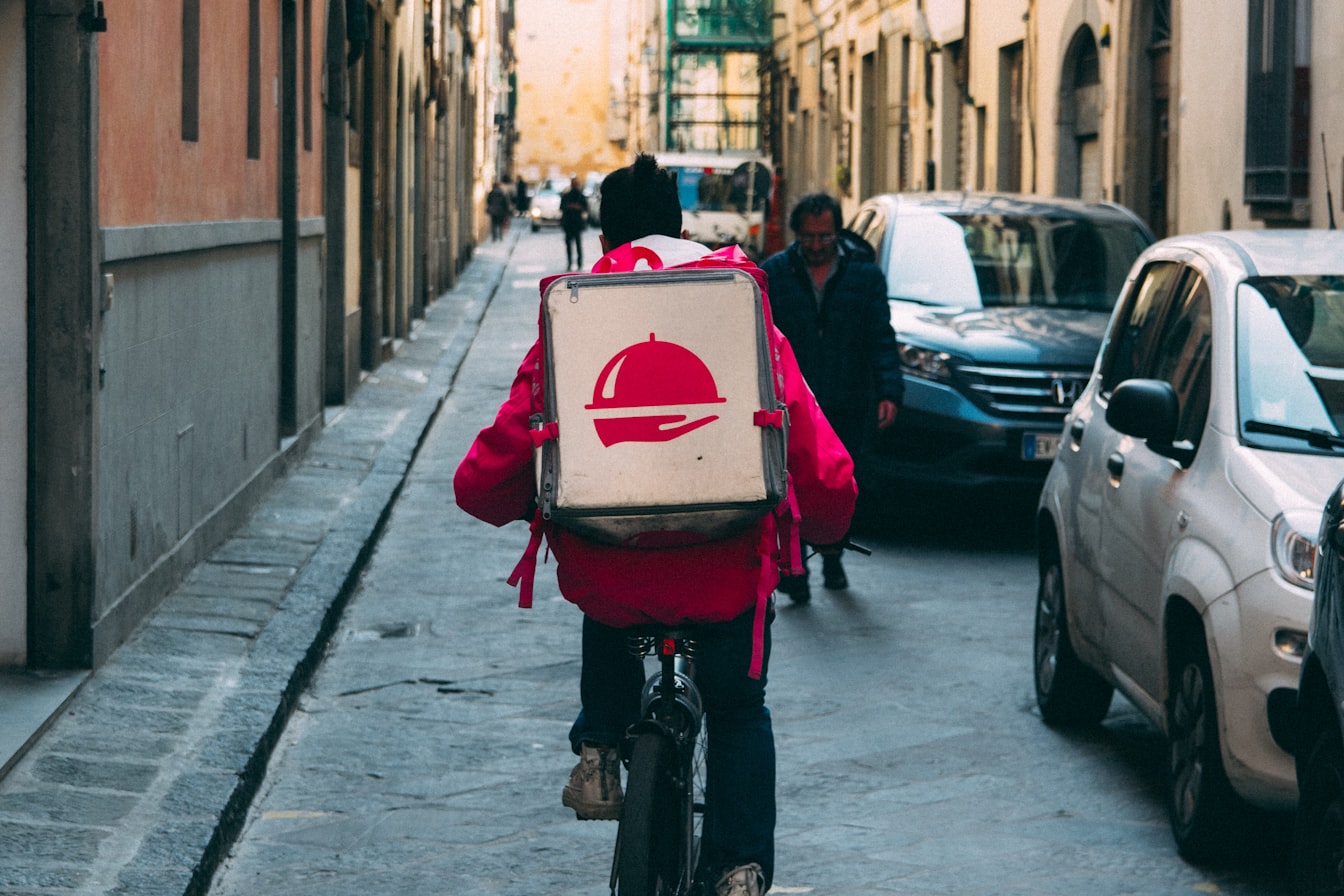
You made money delivering food last year. The CRA wants their cut. What most new delivery drivers don’t realize is that you’re self-employed, and self-employed people get to deduct a LOT of expenses that regular employees can’t touch.
Your first T2125 feels intimidating, but it’s really just a form that says “here’s what I earned, here’s what I spent to earn it, here’s the difference.” That difference is what you actually owe taxes on, and for most delivery drivers, it’s way less than the gross number on your Uber summary.
The document checklist (gather these first)
Before you open any tax software, pull together these documents. Missing even one can cost you deductions:
- T4 slips from your day job (if you have one). Your employer mails these by the end of February
- Platform tax summaries from Uber Eats, DoorDash, Skip the Dishes, or whatever apps you drove for. Platforms covered by the CRA’s reporting rules must send your annual statement by January 31. Look in the app’s tax section or driver portal
- Mileage log. If you kept one, great. If not, don’t panic. We’ll cover how to reconstruct it below
- Phone bill. You used your phone for every single delivery, and part of that bill is deductible
- Gas receipts, insurance, and maintenance records: oil changes, tire rotations, anything you spent on your car
- Delivery bags, phone mounts, car chargers. These are all deductible equipment
- Parking receipts. Paid parking while picking up orders counts
How T4 and T2125 work together
If you have a day job AND deliver on the side, you’re filing one tax return with two income sources. Your T4 income (the day job) goes on your T1 return the normal way. Your employer already deducted taxes, CPP, and EI from your paycheques.
Your delivery income goes on Form T2125 (Statement of Business or Professional Activities). The T2125 attaches to your same T1 return. One return, two income streams.
The key difference: your employer handled all the withholding on your T4 income. Nobody withheld anything on your delivery income. That’s why you might owe money at tax time, and why deductions matter so much.
Filling out the T2125 for delivery work
The T2125 is where the real action happens. Here’s the simplified version.
Line 8299, Gross income: Add up everything you earned from ALL delivery platforms. Uber Eats, DoorDash, Skip, Instacart. All of it goes here. Use your platform tax summaries. If the numbers look wrong, cross-check against your bank deposits.
Expense lines (8521 through 9936, totalled on line 9368): This is where you list your business expenses. Each category gets its own line. Vehicle costs go on 9281 (from Chart A), your phone on 9220, and CCA on 9936.
Line 9946, Net income: Gross minus expenses. This is the number that actually gets taxed.
If you earned $28,000 gross from delivery but had $12,000 in legitimate expenses, you’re only paying tax on $16,000. That’s a massive difference. For a deeper walkthrough of the T2125, see our freelance taxes guide.
Vehicle expenses: the big one
For most delivery drivers, vehicle costs are 60-80% of total deductions. As a self-employed driver, you claim them one way: actual costs × business-use percentage.
Add up every dollar you spent on the car: gas, insurance, maintenance, repairs, licence/registration, and lease payments or car-loan interest (capped for passenger vehicles at $1,100/month for leases and $350/month for loan interest). Then multiply by your business-use percentage, your delivery kilometres divided by your total kilometres for the year.
Say you drove 25,000 km and 15,000 were deliveries. That’s 60% business use. Gas ($3,600) + insurance ($2,400) + maintenance ($1,200) + registration ($120) = $7,320. Claim 60% of it: $4,392. If you own the car, you also claim the business share of depreciation (CCA). Paid parking for pickups counts in full rather than at 60%.
Don’t claim a per-kilometre rate. You’ll see figures around 70¢/km quoted online. Those are the CRA’s automobile allowance rates: the per-km amount an employer can reimburse an employee tax-free. They aren’t a deduction method on the T2125, and a claim built on kilometres × rate won’t hold up if the CRA reviews it. Our actual-expense method guide walks through why.
You need both a mileage log and your receipts. The log proves the percentage; the receipts prove the costs. Check out our vehicle expenses guide for the full breakdown.
“I didn’t keep a mileage log”
Most first-year drivers didn’t. You can reconstruct one.
Uber and DoorDash trip history shows the date, pickup, and dropoff for every delivery. Export it. That gives you the number of trips and approximate distances.
Google Maps Timeline (if you had location history turned on) records everywhere your phone went, with dates. It’s not perfect, but it’s a reasonable reconstruction the CRA may accept, especially if it lines up with your trip history from the apps.
Go through month by month. Estimate your business kilometres from the trip data, estimate your total kilometres from the odometer or Google Timeline, and calculate your business-use percentage. Document your method. A documented, reasonable reconstruction is far better than a guess.
Phone and data plan
You used your phone for every delivery. Navigation, order notifications, customer messages. It’s a core business tool. But you also used it for personal stuff, so you can only deduct the business-use percentage.
A common split for delivery drivers is 50-70% business use. If your monthly plan is $85/month ($1,020/year) and you estimate 60% business use, that’s $612 in deductions. Keep your phone bills as proof.
Other deductions people forget
- Insulated delivery bags. If you bought a hot/cold bag for deliveries, that’s a supply expense. Even the $30 one from Amazon counts
- Phone mount and car charger. Small but legitimate. You bought them for work
- Car washes. Yes, really. If you wash your car to maintain it for delivery work, the business portion is deductible
- Parking fees. Paid parking while picking up orders from restaurants. Not parking tickets, though. Those are never deductible
- Safety vest or rain gear. If you deliver by bike or on foot
These individually small deductions add up to a few hundred dollars. Don’t leave them on the table.
The GST/HST check
Something that catches multi-platform drivers off guard: the $30,000 GST/HST registration threshold applies to your combined income from ALL platforms and all self-employed work, not per platform.
If you earned $18,000 from Uber Eats and $14,000 from DoorDash across four consecutive calendar quarters, you have exceeded the $30,000 small-supplier threshold. A single calendar quarter above $30,000 can trigger registration sooner. Review the GST/HST registration rules for the effective date.
If you’re under $30,000, registration is optional, but it can actually save you money through input tax credits. Worth looking into if you’re close.
The CPP surprise
This is the part that shocks most first-time filers. When you’re employed, your employer pays half your CPP contributions and you pay the other half. When you’re self-employed, you pay both halves.
That’s 11.9% of your net self-employment income above $3,500, up to $71,300 (2025) or $74,600 (2026). Above that, CPP2 adds 8% up to $81,200 (2025) or $85,000 (2026). On $16,000 of net delivery income, that works out to about $1,488 in CPP alone, on top of income tax.
This is exactly why setting aside 25-30% of your delivery income as you earn it is so critical. The CPP bill alone eats a big chunk.
Deadlines (these are different for you)
Because you’re self-employed, you get a later filing deadline but the same payment deadline:
| Deadline | Date | What happens |
|---|---|---|
| Payment due | April 30 | Any tax you owe must be paid by this date or interest starts accumulating |
| Filing due | June 15 | Self-employed filers get until June 15 to submit their return |
The trap: you have until June 15 to file, but you still owe interest on any unpaid balance after April 30. So if you think you owe money, pay an estimate by April 30 even if you’re not ready to file yet. You can always adjust later.
Your first T2125 in 15 minutes
Your first T2125 doesn’t have to be a weekend-long ordeal. Accountly lets you record platform income, categorize expenses, and export a T2125-ready report. Compare what you enter with the statements from every platform before filing.
FAQ
Do I have to file taxes if I only made a few hundred dollars delivering?
Usually, yes. All the income you earn belongs on your return, even a few hundred dollars. And filing is usually worth it anyway: it keeps your government benefits and credits flowing, and if your expenses exceed your income, you can claim a business loss that reduces tax on your other income.
Can I claim the CRA per-km rate for my delivery kilometres?
No. The per-kilometre rates are for allowances employers pay employees. Self-employed drivers claim actual vehicle costs multiplied by their business-use percentage. Only delivery kilometres count as business. Your commute to a day job and your personal errands are personal driving.
What if I drove for multiple platforms? Do I file a separate T2125 for each?
You can file one T2125 that combines all your delivery platform income. Add up gross earnings from Uber Eats, DoorDash, Skip, and any others. List them all under one business activity (e.g., “food delivery services”). Your expenses are shared across all platforms too.
Will the CRA know if I don’t report my delivery income?
Platforms like Uber and DoorDash report payments to the CRA. If your tax return doesn’t include income that the CRA already knows about, you’ll get a reassessment, plus interest and potentially penalties. It’s not worth the risk.
Can I deduct the cost of food I buy while on a delivery shift?
Meals you buy for yourself while working generally aren’t deductible, even if you’re eating between deliveries. One exception: if you deliver on foot or by bike, the CRA allows a small flat daily amount for the extra food you need. The CRA considers personal meals a personal expense regardless of where you are when you eat them.
Should I register for GST/HST even if I’m under $30,000?
It depends. Voluntary registration lets you claim input tax credits on your business expenses (getting GST/HST back on gas, phone, equipment). But it also means charging GST/HST on your services and filing regular returns. For most drivers under $30,000, the paperwork outweighs the benefit. If you’re spending a lot on vehicle costs, though, it might be worth it. Read our GST/HST registration guide for the full math.
The information in this guide is for general informational purposes only and is not intended as accounting, tax, business, or legal advice. Accountly does not provide professional services or act as your accountant, tax advisor, or lawyer. No client relationship is created by your use of this material. Always seek advice from qualified professionals who understand your particular circumstances before acting on any information contained herein.