


Compare
Real Estate Agents: Home Office and Broker Desk Fees
How Canadian real estate agents can assess home-office costs and brokerage desk fees without double-counting an expense.
A
Accountly Team·Track desk fees, MLS dues, mileage, and home office in one place. Your T2125 totals update as you go. No scrambling at year-end, no shoebox of receipts for your accountant.


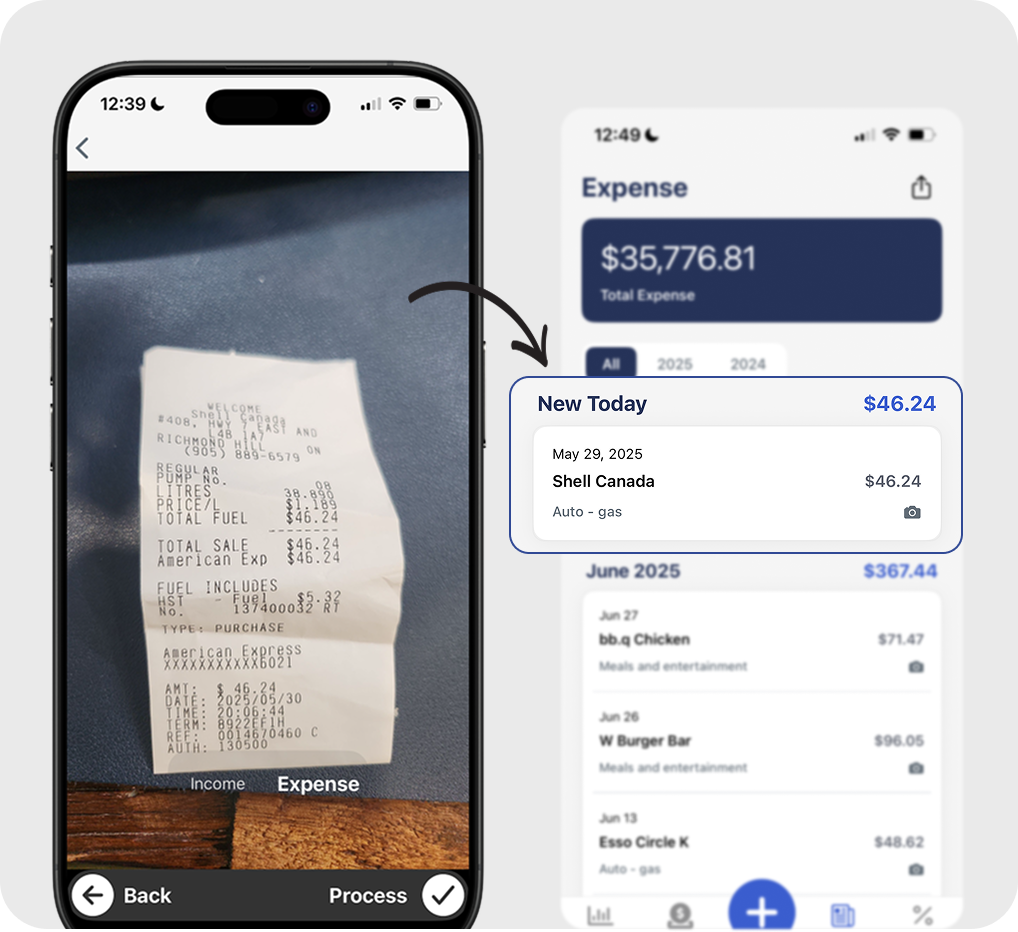
Real estate is high-revenue, high-expense, high-paperwork. Vehicle costs, desk fees, MLS dues, marketing, the broker's split, the home office. Record them in Accountly as they happen so April starts with organized records.
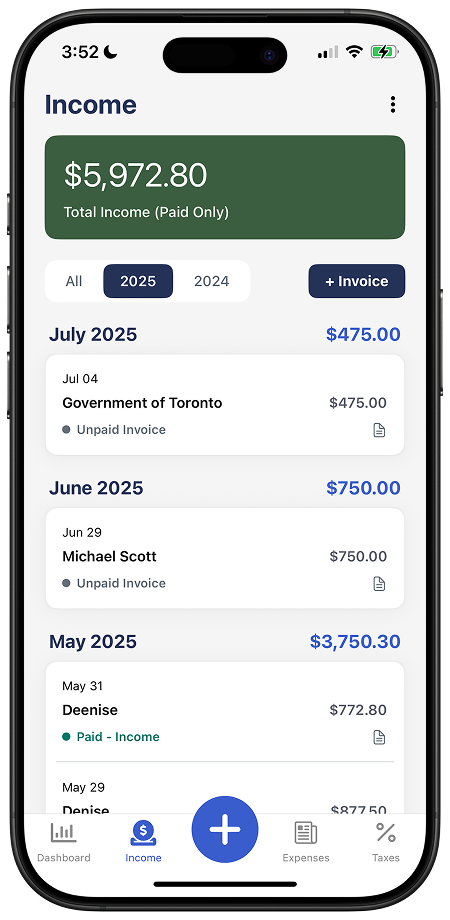
Log gross commission, then record the broker's split, transaction fees, and brokerage adjustments. Use the totals to reconcile your records with T4As before filing.
 Gross commission and net commission tracked separatelyBrokerage splits and transaction fees as expensesGST/HST amounts recorded for review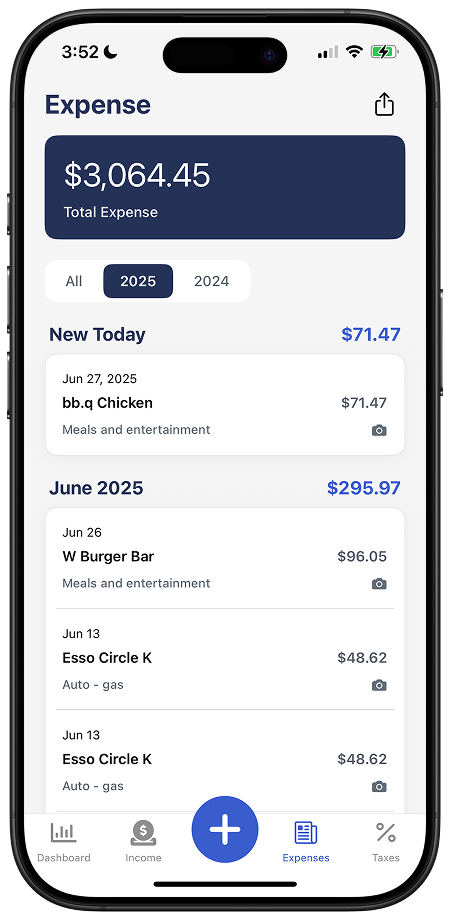
Showings, listing photos, open houses, broker meetings. Log kilometres against trips and Accountly stores it with the rest of your records. Pair with fuel, insurance, and maintenance receipts for a clean vehicle deduction.
Log business-use kilometres trip by tripCapture fuel, maintenance, insurance, and parkingBusiness-use percentage from classified trips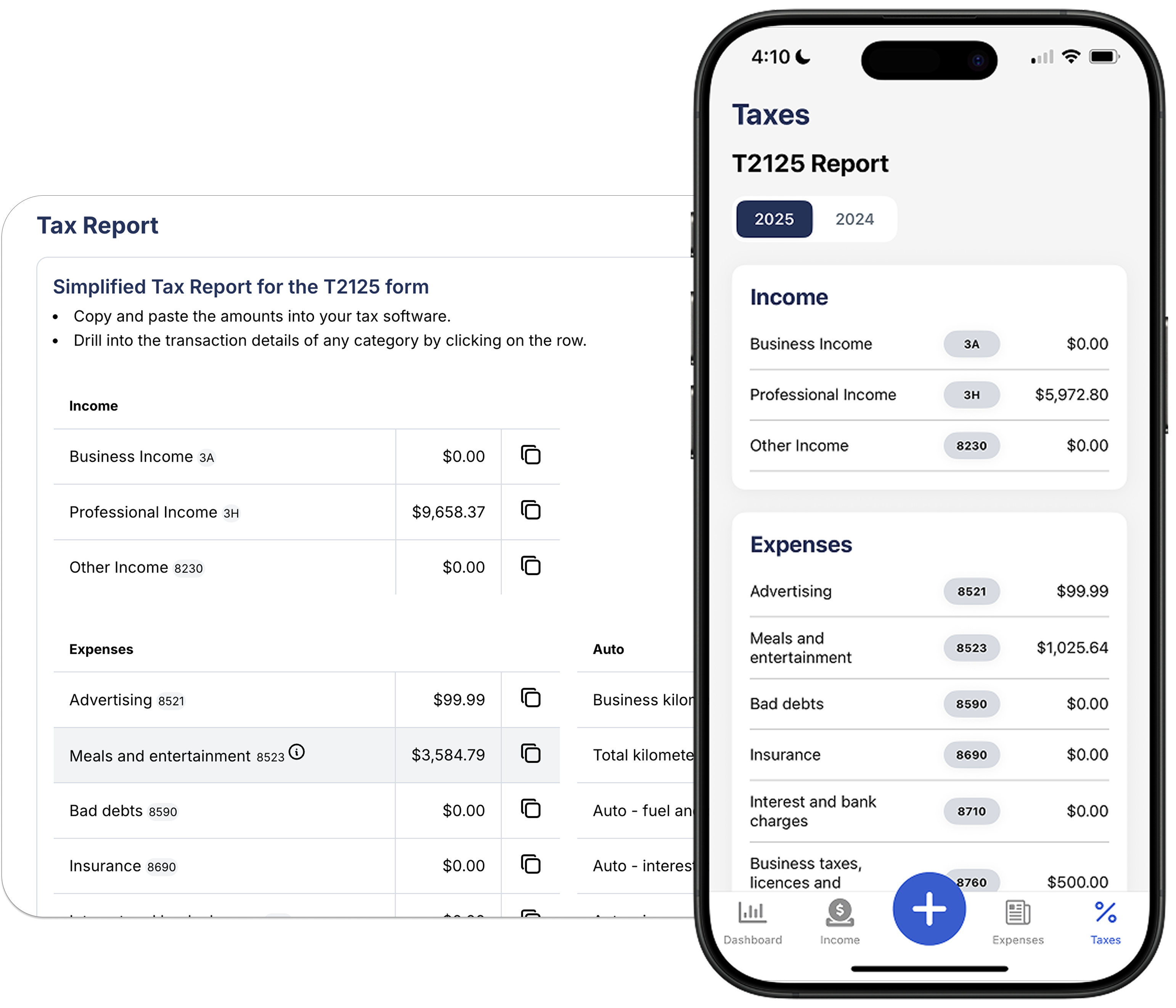
As you log income and expenses, your T2125 category totals update. Review the breakdown yourself or share the supporting records with your accountant.
T2125 totals update in real timeAttach a receipt or note to each expenseInvite your accountant for read-only or edit accessBuilt into Accountly's categories, not buried in a generic accounting app.
Local board fees, MLS subscriptions, and CREA dues are all deductible business expenses.
Monthly desk fees, transaction fees, and brokerage splits. Every dollar tracked and deducted.
Showings, listing visits, open houses. Log kilometres and the business-use percentage of your auto costs.
If you do real work from home, claim a percentage of utilities, internet, and rent or mortgage interest.
Listing photos, signage, social ads, mailers, business cards, all deductible.
Courses, designations, conferences. RECO, OREA, and provincial education count.
Business-use portion of your phone bill and home internet.
Accountant, lawyer, errors-and-omissions insurance, professional liability.
Closing gifts, client meals, and reasonable entertainment expenses.
Specifics, deadlines, and the math, written for Canadian agents.
How Canadian real estate agents can assess home-office costs and brokerage desk fees without double-counting an expense.

Step-by-step guide for Canadian real estate agents filing their T2125. Commission income, GST/HST, vehicle expenses, and key deadlines.

A complete guide to managing taxes, expenses, and accounting as a new real estate agent in Canada.
A complete guide to getting your real estate license in Canada, from courses and costs to choosing a brokerage and surviving your first year.
Yes. Accountly is built for self-employed Canadians, including commission-based agents who file a T2125. Categories like MLS dues, desk fees, vehicle, and home office are set up the way the CRA expects.
Yes. As you log income and expenses, your T2125 totals update automatically. You or your accountant can review the breakdown by line item before filing.
Yes. You can log kilometres against business-use trips. The CRA requires a logbook for vehicle deductions, and Accountly stores that with your records.
Often both. Desk fees are a flat deduction for using brokerage space. Home office is for the percentage of your home used for real estate work, paperwork, calls, prep. Many agents claim each for the way they actually use them.
Registration is generally mandatory when worldwide taxable revenue exceeds $30,000 in one calendar quarter or across four consecutive calendar quarters. The effective date and collection rules depend on which threshold you cross.
Yes. Invite your accountant directly into your Accountly account. They get access to your books and the T2125 totals, no email back-and-forth, no missing receipts.