

Every April, freelancers across Canada go through the same ritual: digging through bank statements, hunting for receipts, and wondering how much they actually owe. It doesn’t have to be like this.
The freelancers who breeze through tax season aren’t smarter or more organized by nature. They just start earlier. If you spread the work across several months instead of cramming it into one panicked weekend, filing becomes straightforward.
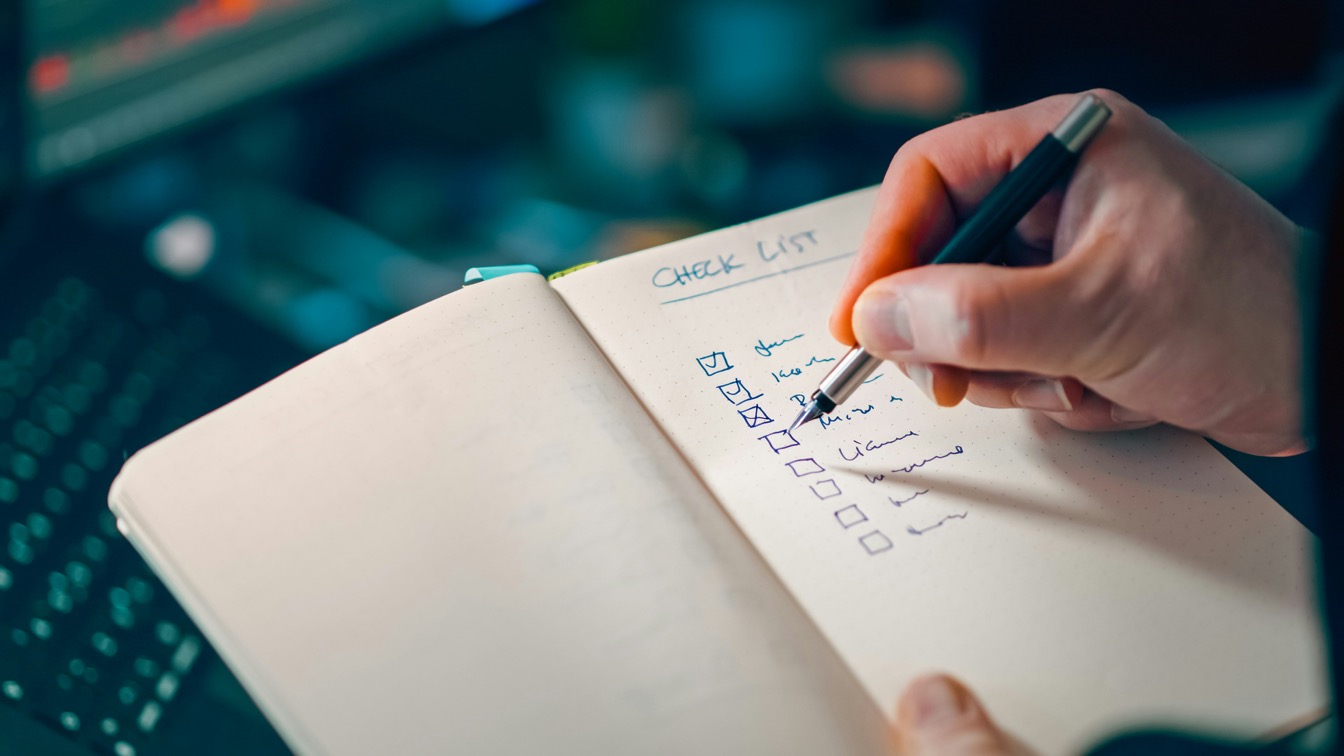
This month-by-month checklist takes you from October all the way through your June 15 filing deadline.
October to November: review the year so far
This is your early warning system. You still have two months left in the tax year, which means you still have time to make moves that lower your bill.
Review your year-to-date income. Pull together every source: client invoices, platform payouts (Upwork, Fiverr, Etsy), affiliate income, interest. If you use Accountly reporting, reconcile the income you entered with bank and platform statements. Otherwise, build the total from those source records.
Estimate your total annual income. Take what you’ve earned through October and project forward. Do you have contracts or recurring clients that will pay in November and December? Add those in. This estimate drives everything else.
Check your RRSP contribution room. Log into your CRA My Account and look at your available RRSP room. If you have room and cash to spare, an RRSP contribution before the March deadline will directly reduce your taxable income. The earlier you know the number, the more time you have to plan. For a deeper look at how RRSPs work for self-employed Canadians, see our RRSP guide for the self-employed.
Review your tax set-aside percentage. If your income is higher than expected, you may need to bump up the percentage you’re saving for taxes. Better to adjust now than face a shortfall in April.
December: make year-end decisions
December is your last chance to reduce your tax bill for the current year. Any business expense incurred before December 31 counts against this year’s income.
Make necessary planned purchases. A cost must still meet the ordinary deduction rules. Computers, furniture, and other property with a lasting benefit may be capital property claimed over time through CCA rather than fully deducted in the purchase year.
Review annual subscriptions. Prepaid expenses may need to be allocated to the period they cover. Paying before December 31 does not automatically make the full amount deductible in that tax year.
Review your GST/HST situation. If you’re approaching or have passed the $30,000 threshold, check whether you need to register for GST/HST. If you’re already registered, confirm your filing frequency (annual, quarterly) and note when your next return is due.
Confirm your quarterly installment payments are up to date. If the CRA required you to pay installments, make sure your September and December payments went through. Missing installments triggers interest charges.
January: gather your documents
The tax year is closed. Now you’re collecting everything you need to file.
Wait for tax slips. Issuers have until the end of February to send T4As, T5s, and other slips. But some arrive in January. Start a folder (physical or digital) and drop them in as they come.
Download platform income statements. Freelance platforms, payment processors (Stripe, PayPal), and marketplaces often publish annual summaries in January. Download them before they get buried in your inbox.
Pull your bank and credit card statements. Download all 12 months for every account you used for business. You’ll need these to cross-reference income and catch expenses you forgot to track.
Request any missing invoices. If you did work for a client and can’t find the invoice or payment confirmation, ask now. Don’t wait until March when everyone is busy.
February: organize and calculate
This is the month where you turn a pile of documents into actual numbers.
Sort expenses by category. The T2125 has specific categories: advertising, meals and entertainment (50%), office supplies, professional fees, rent, utilities, and more. Go through your expenses and assign each one to a category.
Calculate your home office deduction. Self-employed people use the detailed business-use-of-home calculation. Measure the workspace, account for shared or part-time use, and apply the resulting percentage to eligible costs. The temporary $2-per-day method was for eligible employees from 2020 to 2022, not self-employed business expenses.
Finalize your mileage log. Record each business trip’s date, destination, purpose, and kilometres, plus the vehicle’s total annual kilometres. Self-employed people generally apply the resulting business-use percentage to eligible actual vehicle expenses. The CRA’s employer automobile allowance rates are not a general T2125 deduction method. See our vehicle expenses guide.
Check which tax slips have arrived. By the end of February, you should have your T4As and T5s. T3s can come as late as March 31, and RRSP receipts for January-February contributions often arrive in March. Cross-check against your income sources. If anything is missing, follow up with the issuer.
RRSP contribution deadline: March 1, 2027. The deadline is 60 days after year-end, so for the 2026 tax year it’s March 1, 2027. Any RRSP contribution made by this date counts against the previous tax year. Run a rough net-income number (gross revenue minus expenses) before you decide. If it’s higher than you expected and you have contribution room, this is your last chance to bring it down. Check your RRSP strategy to make sure you’re contributing the right amount.
March: final preparation
March is when the real filing prep happens.
Finalize all deductions. Go through your expense categories one more time. Did you miss any subscriptions? Professional memberships? Insurance premiums? Conference fees? Every deduction you miss is money left on the table.
Prepare your T2125 (Statement of Business Activities). This is the form where you report your self-employment income and expenses. You’ll need your total gross revenue, cost of goods sold (if applicable), and all business expenses broken down by category. The T2125 feeds into your T1 return.
Calculate your net business income. Gross revenue minus total expenses equals net income. This is the number that determines your income tax and CPP contributions.
April: GST/HST and payment deadline
Two big deadlines this month, and they’re easy to confuse.
Check your GST/HST deadlines. For an individual with a December 31 reporting-period end and business income for income-tax purposes, the annual GST/HST payment is generally due April 30 and the return is due June 15. Other registrants and reporting periods use different deadlines. Confirm the dates shown in your CRA account and claim only eligible input tax credits supported by records.
Pay any balance owing by April 30. Even though your T1 filing deadline as a self-employed person is June 15, any taxes you owe are due April 30. Interest starts accruing on May 1 on unpaid amounts. The CRA currently charges compound daily interest on overdue balances, so don’t miss this date even if you haven’t filed yet.
Pay by instalment if required. For 2026 outside Quebec, the test generally requires net tax owing above $3,000 for 2026 and for either 2025 or 2024. Quebec uses $1,800. Individual instalments are generally due March 15, June 15, September 15, and December 15.
May to June: file your T1 return
Self-employed filing deadline: June 15. This is generally the date by which you must submit your T1 income tax return if you or your spouse or common-law partner carried on a business. File through NETFILE-certified software, a tax professional, or another CRA-accepted filing method. CRA My Account does not prepare and file the initial return.
Don’t wait until June 15 if you’re owed a refund. If you overpaid through installments or your deductions brought your tax bill below what you already paid, file as early as possible. Refund interest only starts 30 days after you file (and never before May 30), so waiting just delays your money.
Review your Notice of Assessment. Once the CRA processes your return, they’ll send a Notice of Assessment (NOA). Read it carefully. It confirms your RRSP room for next year, any adjustments the CRA made, and whether you owe more or are getting a refund.
Set up next year’s system. Once you’ve filed, set up tracking for the new tax year. Create your expense categories, save receipts as they arrive, and start the mileage log fresh. Start Accountly free if you want those records in one workspace.
Key dates at a glance
| Date | Deadline | What to Do |
|---|---|---|
| October-November | No hard deadline | Review income, check RRSP room, adjust tax savings rate |
| December 31 | End of tax year | Make planned business purchases (prepaid costs are deducted over the period they cover) |
| End of February | Tax slip deadline | All T4As, T5s should be received |
| March 1, 2027 | RRSP contribution deadline (60 days after year-end) | Final RRSP contribution for the 2026 tax year |
| March 15 | Installment payment | Q1 installment due (if required) |
| April 30 | Tax payment deadline | Pay balance owing (interest starts May 1) |
| April 30 | GST/HST payment deadline for many self-employed annual filers | Remit annual net tax; the return may be due June 15 |
| June 15 | GST/HST filing deadline for many self-employed annual filers | File the annual GST/HST return |
| June 15 | T1 filing deadline | File your income tax return (self-employed) |
| June 15 | Installment payment | Q2 installment due (if required) |
Frequently asked questions
When is the tax filing deadline for self-employed Canadians? June 15. But any balance owing is due April 30. If you owe money and wait until June to pay, you’ll be charged interest from May 1 onward. File early if you can, especially if you’re expecting a refund.
What forms do I need to file as a freelancer? At minimum, your T1 General (personal income tax return) and T2125 (Statement of Business or Professional Activities). If you’re registered for GST/HST, you’ll also file a GST/HST return. Your T2125 reports your gross business income and all deductible expenses.
Can I deduct expenses I forgot to track with receipts? The CRA requires you to keep records for six years. If you’re audited and can’t produce a receipt, the deduction may be denied. Bank and credit card statements can sometimes serve as backup, but actual receipts or invoices are the gold standard. Start tracking them throughout the year so you’re not scrambling later.
What happens if I miss the June 15 filing deadline? The CRA charges a late-filing penalty of 5% of the balance owing, plus 1% per month for up to 12 months. If you were charged a late-filing penalty in any of the previous three years and the CRA sent you a demand to file, it rises to 10% of the balance owing plus 2% a month, for up to 20 months. Even if you can’t pay, file on time to avoid the penalty.
Do I need to pay quarterly installments? For 2026 outside Quebec, your net tax owing must generally exceed $3,000 for 2026 and for either 2025 or 2024. Quebec uses $1,800. Instalments are generally due March 15, June 15, September 15, and December 15. Interest and, in some cases, a separate penalty can apply to late or insufficient payments.
How does Accountly help with year-end tax prep? Accountly reporting organizes the income, expenses, categories, and receipt images you enter during the year. Reconcile the report with bank, invoice, and platform records before using the totals for a return or sending them to an accountant. Start free.
The information in this guide is for general informational purposes only and is not intended as accounting, tax, business, or legal advice. Accountly does not provide professional services or act as your accountant, tax advisor, or lawyer. No client relationship is created by your use of this material. Always seek advice from qualified professionals who understand your particular circumstances before acting on any information contained herein.