

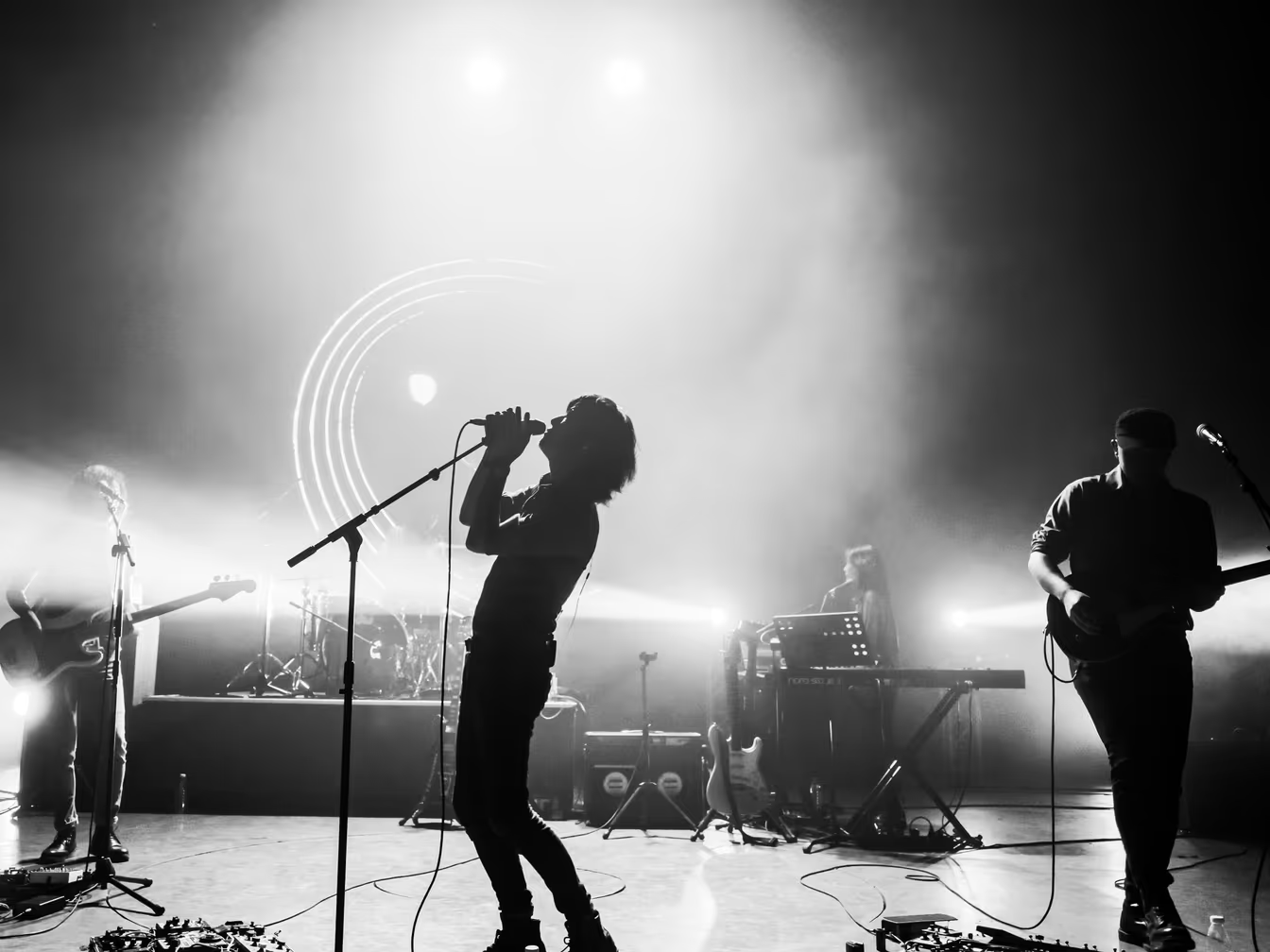
Cash from the door, an e-transfer for the wedding gig, a trickle from streaming, a teaching student on Tuesdays. Musicians earn from everywhere, and the CRA wants all of it reported. The flip side: your instruments, travel, and gear are deductions most performers never fully claim.
If you play shows, session work, teach, or release music, your income goes on Form T2125, and your kit comes off the top.
Every gig, every stream, every lesson
It all counts as self-employment income: live performance fees, door splits, session and recording work, streaming and royalty payments, teaching income, merch, and sync licensing. Cash gigs included. There’s no minimum, and unreported cash deposits are an audit flag.
No tax is withheld from any of it, and you pay both halves of CPP, roughly 11.9% of net income, up to the yearly maximum pensionable earnings. Have a breakout year from touring or streaming that pushes net income past roughly $75K? CPP2 adds another ~8% on the band above that cap. Set aside 20-30% depending on your earnings.
What musicians can deduct
| Expense | Deductible? | Notes |
|---|---|---|
| Instruments & gear | Yes | Enduring equipment is generally capital property; many instruments fall in Class 8 |
| Strings, reeds, repairs, maintenance | Yes | Current expenses, deduct in full |
| Travel to gigs | Yes | Business share of vehicle costs (log the km), flights, hotels for touring |
| Rehearsal & studio rental | Yes | Practice space, recording time |
| Software & subscriptions | Yes | DAWs, plugins, distribution (DistroKid, TuneCore) |
| Promotion | Yes | Photos, videos, ads, your website, PR |
| Stage clothing | Sometimes | Costumes/wardrobe used only for performance |
| Union dues | Yes | Musicians’ association memberships |
| Lessons & coaching | Yes | Training that improves your craft |
| Sidemen & collaborators | Yes | Paying other players = subcontractor cost |
Your instruments are the big one. A guitar, keyboard, or PA that provides an enduring benefit is generally capital property deducted over time through Capital Cost Allowance; musical instruments are commonly Class 8. Consumables such as strings and reeds are current expenses. Price alone does not decide the treatment.
If you pay other musicians for a gig or session, that’s a deductible subcontractor payment, so keep their invoice. See the hiring subcontractors guide.
Touring and travel
Out-of-town shows make travel a real deduction: the business share of your vehicle costs for driving to gigs (keep a log), flights and hotels on tour, and parking. Meals on the road are 50% deductible. Keep it tied to actual work dates.
GST/HST on performance income
Cross $30,000 in a single calendar quarter and you’re a registrant right away: charge GST/HST on the gig that put you over and register within 29 days. Hitting the number in one quarter doesn’t come with a grace period. Get there over four consecutive quarters and you have until the end of the following month to start charging. Working performers and teachers can hit this. Most performance and session fees are taxable, so once registered you charge GST/HST and claim back the GST/HST on gear and travel. One nuance: some music lessons can be GST/HST-exempt. If teaching is a big part of your income and you’re near the threshold, get advice. The registration guide covers the basics.
Working musician vs. hobby
If you’re gigging to earn (promoting, booking, trying to profit), it’s a business, and your expenses, even the losses, are claimable. A genuine hobby with no profit motive is treated differently. The moment you’re being paid to play regularly, the CRA expects a T2125.
Deadlines
| Deadline | What’s due |
|---|---|
| April 30 | Tax balance owing (payment) |
| June 15 | T1 + T2125 filing (self-employed) |
Let Accountly track the gigs and gear
Accountly income and expense tracking keeps the amounts you enter for gigs, streaming, teaching, and expenses in one place. Use receipt capture for music-store purchases, classify capital property separately, and monitor the GST/HST tests yourself.
Start free. About five minutes.
Frequently asked questions
Do I have to report cash from gigs?
Yes. All performance income (cash, e-transfer, or otherwise) is self-employment income on a T2125. There’s no minimum, and the CRA can match bank deposits, so unreported cash is a risk.
Can I write off my instruments?
Yes, when they are used to earn business income. Instruments and other enduring gear are generally capital property deducted over time through CCA, while consumables such as strings and reeds are current expenses.
Is streaming and royalty income taxable in Canada?
Yes. Streaming payouts, royalties, and sync licensing are self-employment income reported on your T2125, the same as gig fees.
Do musicians have to charge GST/HST?
Once revenue exceeds $30,000 in a single calendar quarter, or over four consecutive quarters, registration is mandatory and you charge GST/HST on taxable performance and session income. Some music lessons may be exempt; confirm if teaching is a large share of your income.
Can I deduct stage clothing?
Costumes or wardrobe used exclusively for performance can be deductible. Regular clothing you also wear off stage generally isn’t.
How much should I set aside from gig income for taxes?
For most working musicians, 20-30% of income covers income tax and CPP, plus any GST/HST you collect once registered.
Official CRA references
Check the CRA’s Form T2125 and business expense guidance against your tax year and circumstances.
The information in this guide is for general informational purposes only and is not intended as accounting, tax, business, or legal advice. Accountly does not provide professional services or act as your accountant, tax advisor, or lawyer. No client relationship is created by your use of this material. Always seek advice from qualified professionals who understand your particular circumstances before acting on any information contained herein.