

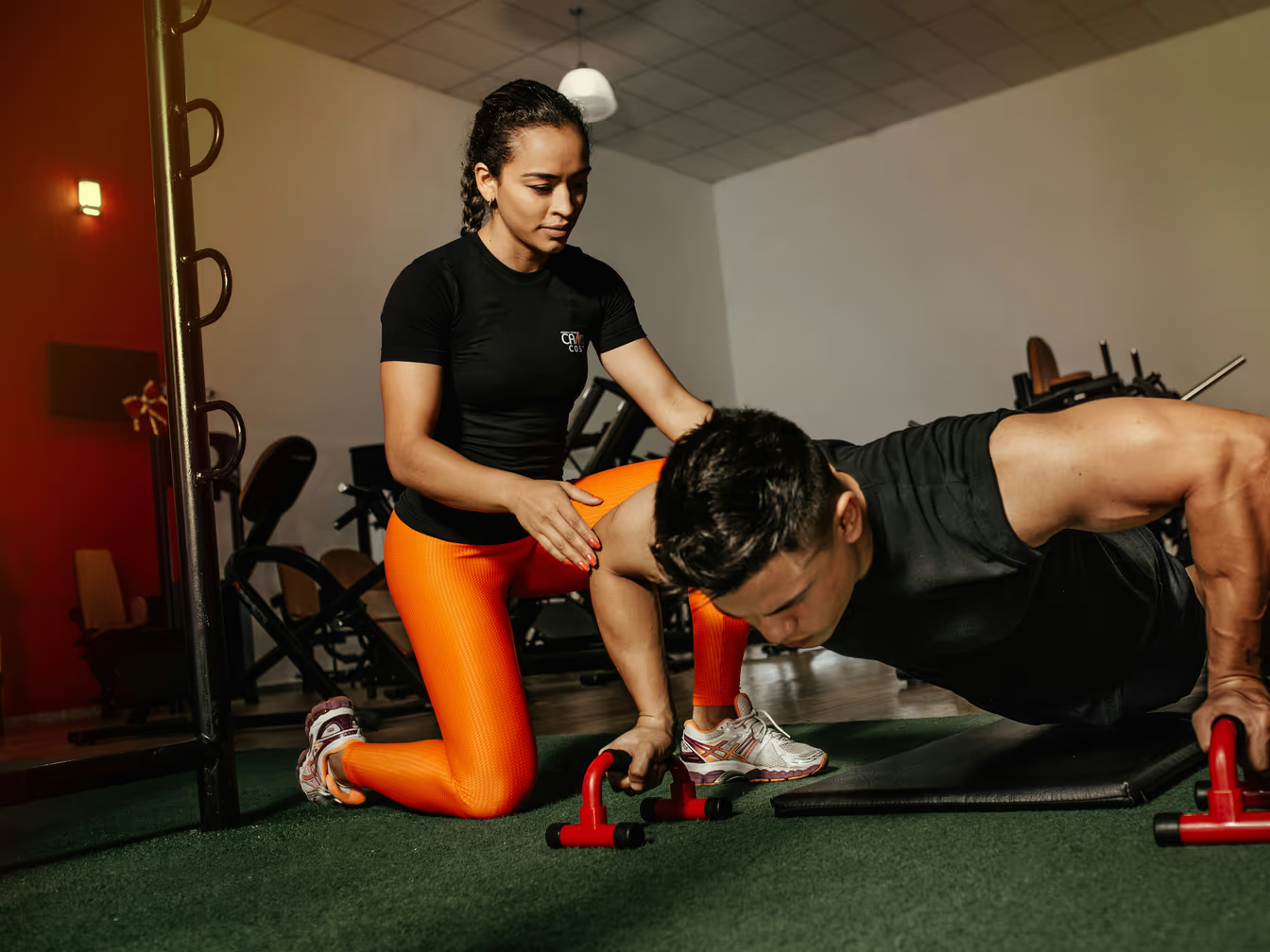
If you train clients on a gym floor as an independent, run boot camps in the park, or coach online, you’re self-employed, even when you work out of someone else’s gym. The gym isn’t your employer; it’s your landlord. And that changes how you file.
Your income goes on Form T2125, and the rent or split you pay the gym, your recertifications, and your gear all come off the top.
Employee or independent? It decides your whole return
Some trainers are employees of a gym (T4, tax withheld). Many are independent contractors who pay the gym for floor access or split session fees. If you set your own rates, bring your own clients, choose your hours, and pay the gym a chargeback or rent, you’re almost certainly self-employed.
That means no tax is withheld, you pay both halves of CPP (11.9% of net income above $3,500, up to the yearly maximum, plus 8% CPP2 on higher incomes), and you set aside 25-30% of every payment yourself. If your gym hands you a T4A or pays you in full with nothing withheld, it’s treating you as self-employed, but the slip doesn’t decide it. The working relationship does. If you really are independent, file a T2125.
The gym chargeback is your biggest deduction
This is the one trainers under-claim. Whatever you pay the gym (a flat rent for floor space, a percentage chargeback on each session, or a monthly fee) is a fully deductible business expense. Train out of a commercial gym and hand over 30% of every session fee? That 30% comes off your income.
Keep the statements. Gyms usually provide a monthly breakdown of your chargebacks; that’s your record.
What else trainers and instructors deduct
| Expense | Deductible? | Notes |
|---|---|---|
| Gym rent / chargebacks / floor fees | Yes | Usually your single biggest expense |
| Recertifications & renewals | Yes | CPT, CanFitPro, NASM recerts, CPR/First Aid renewals; your initial cert generally isn’t |
| Continuing education | Yes | Specialty courses, workshops, nutrition coaching |
| Liability insurance | Yes | Often required to train clients |
| Equipment | Yes | Supplies like bands and mats are expenses; gear with lasting value (a rack, a bike) goes through CCA |
| Music / app subscriptions | Yes | Streaming for classes, coaching apps, Trainerize |
| Online coaching platform fees | Yes | TrueCoach, Trainerize, payment processing |
| Branded apparel | Yes | With your logo (plain gym clothes are not deductible) |
| Vehicle costs (business share) | Yes | Gas, insurance, repairs, CCA × your business-km %; keep a log |
| Phone & internet | Business portion | Especially for online coaching |
Certifications are the other commonly missed one. Recertifications, CPR/First Aid renewals, and specialty courses that upgrade the skills you already use (kettlebell, pre/post-natal, nutrition) are all deductible professional development. Your initial CPT cert is different: it gives you a new qualification, so it generally isn’t a business expense, though the tuition may qualify for the tuition tax credit.
Online and hybrid coaching
Coaching clients remotely adds deductions: your coaching platform (Trainerize, TrueCoach), video and program-design software, a webcam and mic, and the business portion of your internet. Report income from app subscriptions and online programs the same as in-person; it’s all self-employment income.
GST/HST: many trainers cross $30,000
Full-time trainers often clear the $30,000 over four consecutive quarters threshold. When that happens, you stop being a small supplier at the end of the following month and have 29 days to register. Top $30,000 in a single calendar quarter and there’s no grace period: you’re a registrant from the session that put you over, and you register within 29 days. Personal training services are generally taxable (not exempt), so once registered you charge GST/HST on your sessions and claim back the GST/HST on your gear, certs, and gym fees. The Quick Method often suits low-overhead trainers well.
Equipment versus supplies
There’s no general CRA dollar line for fitness equipment. Something used for more than a year may be capital property deducted over time through CCA, while supplies used up or replaced quickly are current expenses. A durable rack is likely capital property; small consumable supplies are not.
Running classes from home or a garage studio
If you train clients from a dedicated space at home, claim the business-use percentage of your home costs. A converted garage gym used to train paying clients qualifies on the same square-footage basis as any home office.
Deadlines
| Deadline | What’s due |
|---|---|
| April 30 | Tax balance owing (payment) |
| June 15 | T1 + T2125 filing (self-employed) |
Let Accountly track the chargebacks
Accountly receipt capture extracts details from gym chargeback, certification, and equipment receipts for review. Record session income as it is earned, identify capital property separately, and monitor the GST/HST tests yourself.
Start free. About five minutes to set up.
Frequently asked questions
Am I self-employed if I train clients at a commercial gym?
Usually yes. If you set your own rates, bring your own clients, and pay the gym rent or a chargeback rather than being on payroll, you’re an independent contractor who files a T2125. The gym is your landlord, not your employer.
Can I deduct the percentage the gym takes from my sessions?
Yes. Gym chargebacks, floor rent, and monthly access fees are fully deductible business expenses, often a trainer’s single largest deduction. Keep the gym’s monthly statements as proof.
Are my certifications and recertifications tax deductible?
Your recertifications are, but your first certification usually isn’t. Renewals (including CPR/First Aid) and continuing-education courses that maintain or upgrade your training skills are deductible professional development. An initial certification like your CPT gives you a new qualification, so it generally isn’t a business expense, though eligible tuition may qualify for the tuition tax credit.
Do personal trainers have to charge GST/HST?
Once your revenue exceeds $30,000 over four consecutive quarters, or $30,000 in any single quarter, registration is mandatory and you charge GST/HST on your (taxable) training services. A single big quarter makes you a registrant right away; over four quarters, you have until the end of the following month. Below that, it’s optional.
Can I write off equipment I buy for training?
Yes. There is no general dollar cutoff. Gear that provides an enduring benefit may be capital property deducted over time through CCA, while supplies used up in the work are current expenses.
How much should I set aside from training income for taxes?
Reserve 25-30% for income tax and CPP, and set aside any GST/HST you collect separately once you’re registered.
Official CRA references
Check the CRA’s Form T2125 and business expense guidance against your tax year and circumstances.
The information in this guide is for general informational purposes only and is not intended as accounting, tax, business, or legal advice. Accountly does not provide professional services or act as your accountant, tax advisor, or lawyer. No client relationship is created by your use of this material. Always seek advice from qualified professionals who understand your particular circumstances before acting on any information contained herein.