

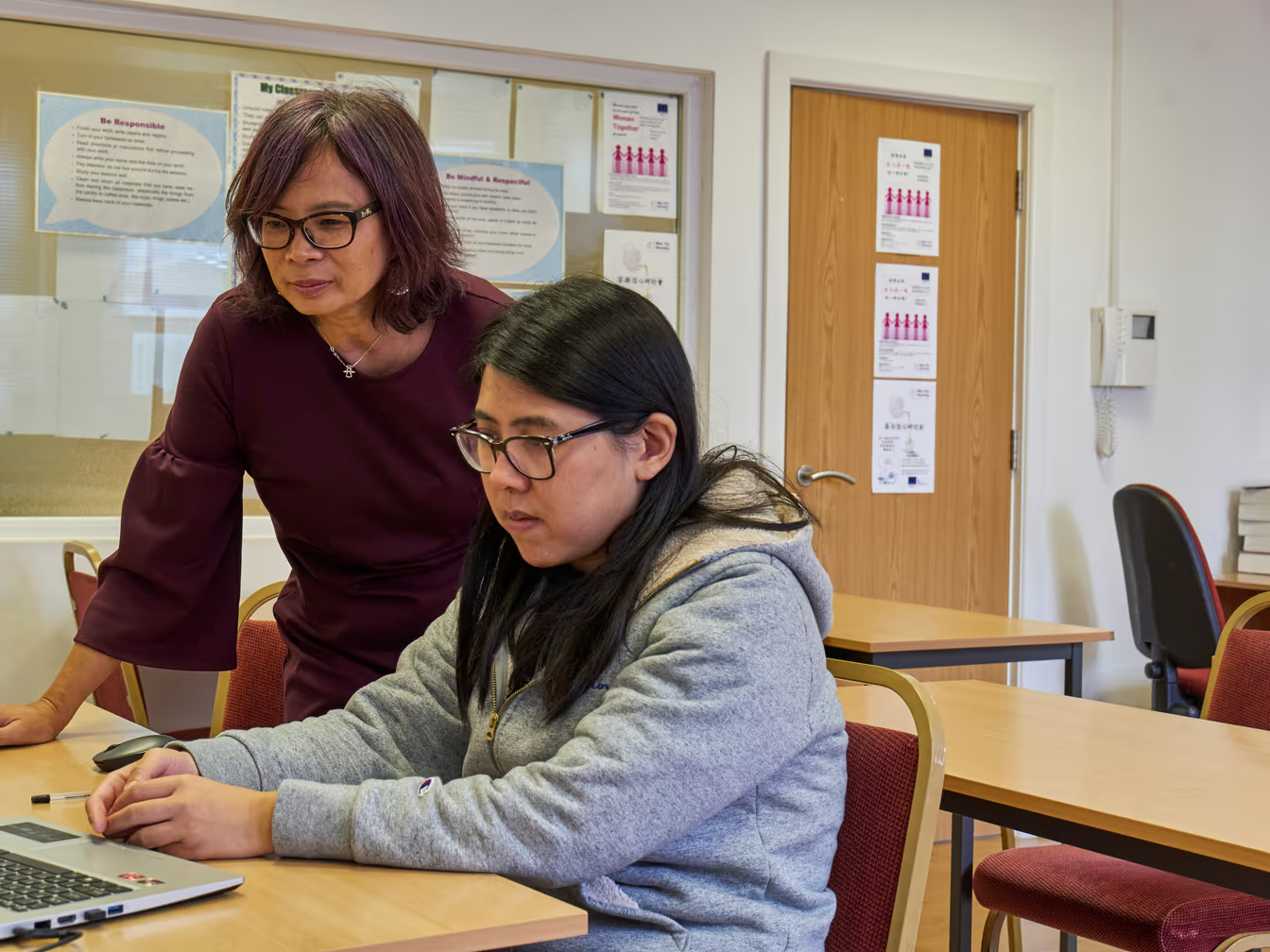
If you tutor on the side (math after school, piano on weekends, English over Zoom), the CRA wants that income reported, including the cash. It doesn’t matter that it’s small, part-time, or paid in twenties. Tutoring income is self-employment income.
The reassuring part: it goes on Form T2125, the same simple form every freelancer uses, and you can deduct your costs against it. Most small tutors owe very little once they do.
Yes, you report the cash
This is the one tutors get wrong. “It was only a few hundred dollars in cash” is not a CRA exemption. There’s no minimum threshold for reporting self-employment income. The first dollar counts.
The CRA cross-checks bank deposits, e-transfers, and tutoring-platform records (Wyzant, Preply, Superprof, TutorOcean). If money lands in your account regularly and never appears on a return, that’s an audit flag. Report it, deduct against it, and you’re clean.
What counts as income
Everything you’re paid to teach: in-person sessions, online lessons, group classes, exam prep packages, and any platform payouts. If a platform takes a cut, you report the gross amount you earned and deduct their fee as an expense.
What tutors can deduct
Your expenses are smaller than a tradesperson’s, but they’re real, and they bring your taxable income down fast.
| Expense | Deductible? | Notes |
|---|---|---|
| Teaching materials | Yes | Workbooks, textbooks, printing, whiteboards |
| Platform / booking fees | Yes | Wyzant, Preply, Calendly, Superprof cuts |
| Online tools | Yes | Zoom, a tablet stylus app, screen-share tools |
| Home workspace | Yes (business-use %) | If you have a dedicated tutoring space |
| Internet & phone | Business portion | Especially for online tutoring |
| Vehicle costs for trips to students’ homes | Yes | Business share of gas, insurance, repairs, CCA; keep a log |
| Professional development | Yes | Courses to improve your subject or teaching |
| Laptop / tablet | Yes | Class 50 CCA regardless of price, not a flat $500 cutoff; proposed rules allow up to 100% in year one if in use before 2027 |
For online tutors, your internet, a decent webcam, a tablet for writing out problems, and your Zoom subscription are all deductible at the business-use percentage. For in-person tutors who travel, keep a mileage log; driving to a student’s home is deductible, though it follows the CRA’s vehicle rules in our vehicle expenses guide.
The home workspace question
If you tutor from a dedicated space at home, a room set up for lessons rather than a shared corner of the house, you can claim the business-use percentage of rent (or mortgage interest), utilities, and internet. The space should be genuinely used for tutoring. The kitchen table you also eat at is a harder claim than a spare room set up as a study. See the home office guide for how to calculate it.
GST/HST: most tutors never hit it, but know the line
You only have to register for GST/HST once your taxable revenue tops $30,000, and that can happen faster than “over four consecutive quarters” makes it sound: go over $30,000 in a single calendar quarter and you’re a registrant from the session that put you over (register within 29 days), not just once a four-quarter total gets there. Most part-time tutors never get close. If tutoring becomes a full-time business and you cross it, registration is mandatory: see our GST/HST registration guide for how that works.
One nuance: tutoring can be exempt from GST/HST, but the exemption turns on the subject matter, not on whether the session is private. Instruction that follows a curriculum designated by a provincial school authority (say, a provincial math or English curriculum) can qualify whether you teach it one-on-one or to a group. That’s why the exam prep packages mentioned above are a different story: SAT-style prep and general study-skills coaching aren’t tied to a specific provincial curriculum, so they’re very unlikely to qualify for the exemption even though they’re delivered one-on-one. Exempt tutoring doesn’t count toward the $30,000 at all; only your taxable sales (like that exam prep) do. If you’re approaching $30,000 and think some of your tutoring might be curriculum-exempt, get advice on whether it fits before you decide not to charge tax.
Tutoring as a student yourself
A lot of tutors are university students, which works in your favor two ways.
Your basic personal amount (around $16,000 federally; it rises yearly) means the first chunk of total income is tax-free. If tutoring is your only income and it’s modest, you may owe little or nothing, but filing is still worth it: it keeps you onside, banks RRSP room, and keeps benefits flowing.
Tutoring income also counts as earned income, which builds RRSP contribution room for later. Even if you don’t contribute now, filing records it.
Keep it stupidly simple
You don’t need accounting software built for a 50-person company. You need one habit, really: log every session (date, student, amount, cash or e-transfer), keep receipts for materials and tools, and set aside 20-25% of what you earn as you go (tutors’ CPP-plus-tax bite is usually lighter than higher earners, but don’t get caught short).
That’s it. A tutor who tracks as they go spends ten minutes at tax time instead of a panicked weekend.
Deadlines
| Deadline | What’s due |
|---|---|
| April 30 | Tax balance owing (payment) |
| June 15 | T1 + T2125 filing (self-employed) |
Let Accountly handle the tracking
Accountly logs your tutoring income, captures material receipts from a photo, and sorts everything onto your T2125, so reporting cash and e-transfers is a non-event instead of a year-end scramble.
Start free. It takes about five minutes.
Frequently asked questions
Do I have to report cash tutoring income?
Yes. All self-employment income is reportable regardless of how you’re paid or how small it is. There’s no minimum. The CRA matches bank deposits and platform records, so unreported cash is an audit risk.
I only made about $1,000 tutoring. Do I still file?
Report it on a T2125. With the basic personal amount and your deductions, you may owe little or nothing, but filing is still worth it: it keeps you compliant and builds RRSP room.
Can I deduct my internet and laptop for online tutoring?
Yes, at the business-use percentage. Internet, a webcam, a tablet for writing out work, and subscriptions like Zoom are deductible. A laptop, tablet, or webcam is Class 50 capital property, so it goes through CCA regardless of price, not just once it’s over $500. Under proposed rules, if you start using it before 2027, you can write off up to 100% in the first year.
Do I charge GST/HST on tutoring?
Only if your taxable revenue exceeds $30,000, and that can trigger in a single quarter, not just over four consecutive ones. Tutoring that follows a provincial school curriculum may be GST/HST-exempt, whether it’s one-on-one or group, and exempt tutoring doesn’t count toward the $30,000 at all. Exam prep and general skills coaching usually aren’t curriculum-connected, so they’re taxable and they count. Confirm your situation before charging.
Can I write off driving to students’ homes?
Yes: the business share of your vehicle costs (gas, insurance, repairs, CCA), based on business kilometres ÷ total kilometres. Keep a log with the date, destination, purpose, and kilometres of each trip. There’s no per-km rate for self-employed people.
How much should I set aside for taxes as a tutor?
For most part-time tutors, 20-25% of income is a safe reserve for income tax and CPP. Higher earners should lean toward 25-30%.
Official CRA references
Check the CRA’s Form T2125 and business expense guidance against your tax year and circumstances.
The information in this guide is for general informational purposes only and is not intended as accounting, tax, business, or legal advice. Accountly does not provide professional services or act as your accountant, tax advisor, or lawyer. No client relationship is created by your use of this material. Always seek advice from qualified professionals who understand your particular circumstances before acting on any information contained herein.